

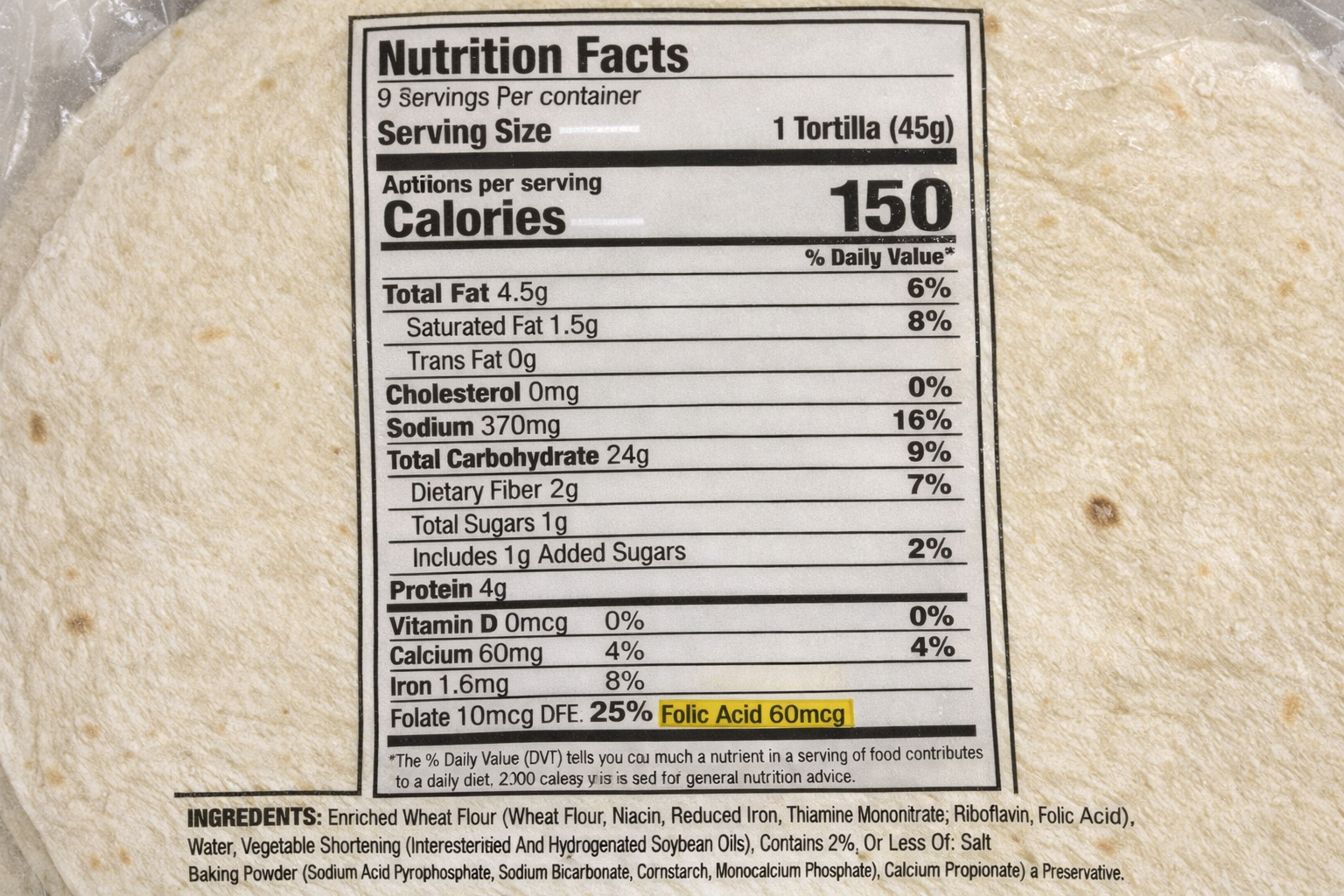
2026 Folic Acid Ingredients Label Requirement in California: What You Need to Know
2026/01/22 5:35 pm
AB 1830 New Folic Acid Requirements – Action may be required | as of January 2026
If you manufacture or package tortillas sold in California, a new state law means changes may be coming to your packaging—and sooner rather than later.
California Assembly Bill 1830 (AB 1830) introduces new folic acid requirements for tortillas sold in the state effective January 1, 2026. While the regulation itself focuses on nutrition, its impact reaches far beyond formulation. New ingredients almost always trigger packaging and labeling updates, which can mean new artwork, revised plates, and careful coordination to stay compliant.
Here’s a breakdown of what AB 1830 means for tortilla manufacturers—and how updating your packaging doesn’t have to be complicated.
What Is AB 1830?
AB 1830 is a California law requiring the inclusion of folic acid in certain tortilla products sold within the state. The goal is to help address folate deficiency by ensuring commonly consumed staple foods include this essential nutrient.
If your tortillas are distributed in California, this law may apply to you—even if your products are sold nationwide or produced outside the state.
Why Ingredient Changes Affect Packaging
Adding folic acid to your tortilla formulation isn’t just a production decision—it’s also a labeling one.
Any change to ingredients or nutritional content typically requires updates to several areas of your packaging, including:
- Ingredient statements
- Nutrition Facts panels
- Allergen or compliance disclosures
- Regulatory language required by California law
If your current packaging does not reflect the updated formulation, it could put your product at risk for non-compliance once the law is enforced.
Labeling Updates Often Mean New Artwork and Plates
When labeling information changes, packaging artwork must be updated to match. This often includes:
- Revising label layouts to accommodate new text
- Adjusting font size or spacing to remain compliant
- Updating digital files used for printing
- Creating new printing plates or cylinders, depending on your packaging format
While this can sound overwhelming, these updates are a normal part of regulatory-driven packaging changes—and they’re much easier with the right partner.
Planning Ahead Helps Avoid Delays and Waste
One of the biggest challenges manufacturers face with regulatory changes is timing. Delays in updating artwork or plates can lead to:
- Excess packaging inventory that can no longer be used
- Production slowdowns while labels are revised
- Last-minute rush fees or reprints
Addressing packaging updates early allows you to transition smoothly and minimize disruption to your operations.
Changing Your Labels for New CA Folic Acid Requirements? We Can Help.
At Great American Packaging, we work with food manufacturers every day to manage packaging updates driven by regulatory changes—like AB 1830.
Our team can help:
- Review how ingredient and labeling changes impact your packaging
- Update artwork files to reflect new folic acid requirements
- Coordinate new plates or printing materials
- Ensure your packaging is production-ready and compliant
We understand the technical side of packaging as well as the practical realities of manufacturing timelines, budgets, and inventory. With the right guidance, updating your packaging for California’s new folic acid requirements can be a straightforward process that keeps your products moving without interruption.
Ready to Update Your Tortilla Packaging? Contact us today to learn how we can help walk you through the simple process of updating your labels.
Great American Packaging is here to help you stay compliant, efficient, and confident as regulations evolve.

